Where Hope Meets Resilience
How Kolbe Catholic College is Helping Transform Remote Flores
PART I: AN ISLAND OF FIRE, FLOWERS, AND FRAGILE HORIZONS
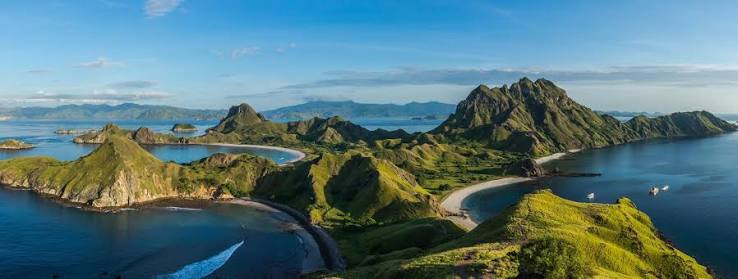
To look upon the island of Flores from above is to witness one of the most breathtaking geographic tapestries in the Indonesian archipelago. Stretching snakelike across East Nusa Tenggara, just east of Sumbawa and Komodo, the island derives its European name from the early sixteenth-century
Portuguese voyagers who christened it Cabo das Flores—the Cape of Flowers. It is an ancient wonderland sculpted by twenty-five volcanoes—fifteen of which remain fiercely active—forming a jagged, knife-edged mountain spine that plunges dramatically into narrow ravines, pristine coral seas, and hidden highland valleys.
Yet behind this postcard-perfect exterior of misty mountain ridges, multi-hued crater lakes at Kelimutu, and iconic emerald spiderweb rice fields lies a daily reality defined by unyielding hardship, isolation, and environmental vulnerability.
THE DUAL REALITY OF FLORES
Natural Splendour:
– Dramatic volcanic spine
– 15 active & 10 dormant peaks
– UNESCO-awarded cultural heritage
– Rich traditions & weaving
– Vibrant ethnic communities
Acute Systemic Struggles:
– Sits along active tectonic faults
– 5,000+ tremors & major quakes
– Severe 7-8 month seasonal droughts
– ~37.9% childhood stunting rate
– Chronic clean drinking water deficits
Geologically, Flores rests directly along a volatile tectonic boundary where the Indo-Australian Plate grinds beneath the Eurasian Plate. The deep Sunda Trench bounds the island to the south, and the active Flores back-arc thrust fault to the north, exposing its inhabitants to devastating seismic and volcanic cataclysms. Memories of the catastrophe of December 12,
1992—when a magnitude 7.8 earthquake and massive 25-metre tsunamis obliterated coastal villages, flattened 18,000 homes, and claimed upwards of 2,500 lives—remain etched into the collective soul of the island. In recent years, the elements have continued to test the endurance of its people. Eruptions from peaks such as Mount Lewotobi Laki-Laki in East Flores have blanketed dozens of agricultural
districts under suffocating volcanic ash, fouling open streams, destroying staple crops, and displacing thousands of villagers from their ancestral lands.
Beyond the sudden violence of earthquakes and volcanoes, the Florenese endure a quieter, relentless struggle against environmental deprivation. The province of East Nusa Tenggara is defined by an arid monsoonal climate, enduring punishing dry seasons that stretch for seven to eight months every year. Rain-fed subsistence crops of maize and dryland rice frequently wither
under severe droughts, leaving rural farming families in deep food insecurity. Water in the highlands is not an ordinary utility—it is a precious, heavily rationed privilege.
Nearly a quarter of rural households lack reliable access to safe drinking water, and unimproved sanitation means waterborne bacteria run rampant. This water crisis strikes children hardest:
Recurrent diarrhoeal infections prevent the gut from absorbing nutrients, driving child stunting rates in the province to an alarming 37.9%—far exceeding national averages. In many remote mountain villages, children face lifelong cognitive and physical developmental delays simply because clean, flowing water remains beyond their reach.
Infrastructure across the interior is notoriously fragile. Isolated communities are connected only by winding, precarious mountain roads that become impassable debris tracks during heavy rainfalls. Basic medical clinics are scarce, electricity is often sporadic, and families struggle to afford basic school fees, creating barriers that threaten to trap generation after generation in
subsistence poverty.
Yet, in the face of these immense geographical and economic trials, the people of Flores possess a warmth and grace that astonishes every outsider fortunate enough to walk their mountain tracks. Bound by ancient communal customs of mutual assistance, deep spiritual devotion, and profound respect for ancestral traditions, the villagers greet visitors not with
complaints of what they lack, but with open arms, singing, and an unmatched generosity of heart.
It is into this extraordinary world that a dedicated contingent of young Western Australians has stepped year after year—bringing not mere charity, but enduring fellowship, sweat, humility, and hope.
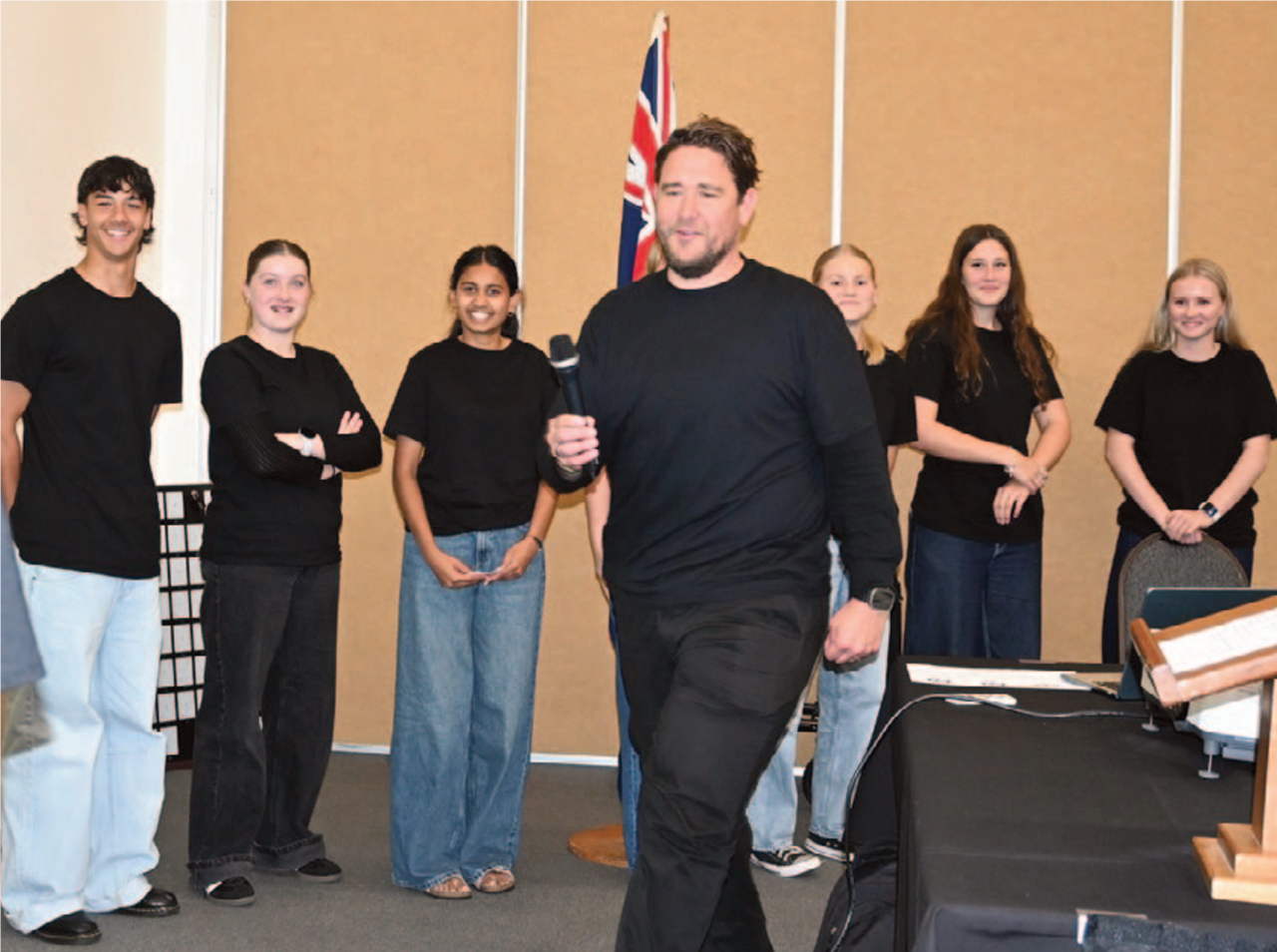
Adam Iriks is carrying the microphone to another student for comments on the 2026 Flores Immersion Tour.
PART II: A ROOM FILLED WITH REVELATION
On a recent Wednesday evening, the regular dinner meeting of the Rotary Club of Palm Beach was filled with an uncommon energy. Rotarians, partners, and honorary guests had gathered at their regular tables, ready to catch up on local club initiatives, welcome new members, and tend to the ongoing community works that define the club’s fellowship. But the highlight of the night belonged to a special delegation of young guests standing at the front of the room.
Accompanied by dedicated staff from Kolbe Catholic College in Rockingham, a dozen Year 10 and 11 students had arrived to deliver a presentation on their recently completed 2026 Flores Immersion Tour.
The Rotary Club of Palm Beach had proudly contributed $2,000 to help sponsor this year’s student team on their humanitarian journey. Club members were eager to learn how their international service funds had been deployed. What followed was not a rehearsed, dry slide show of overseas sightseeing. Instead, the room was treated to an intimate, deeply emotional account of human connection, cultural awakening,
backbreaking manual labour, and youthful altruism.
PART III: THE GENESIS OF A DECADE-LONG MISSION
When Kolbe teacher Adam Iriks stepped forward and gripped the microphone, he brought with him a story that spanned more than a decade of shared history. Mr. Iriks took the Palm Beach Rotarians back to 2014, when Kolbe Catholic College first made the decision to establish an authentic, service-learning immersion program.
The original vision was not to go abroad at all. The college had initially set its sights on partnering with remote Australian Indigenous communities, hoping to engage students in direct reconciliation. However, the logistical hurdles proved extraordinarily difficult. “Aboriginal communities were difficult to get into,” Mr. Iriks explained, “and we stumbled
onto Flores Village Partners.”
That serendipitous discovery changed everything. Flores Village Partners is a dedicated, volunteer-run Australian registered charity established specifically to deliver grassroots aid, sustainable infrastructure, and educational opportunities to isolated, forgotten villages across Flores.
The core pillars of Flores Village Partners align with Rotary’s own global areas of focus:
– Basic Education & Literacy: Funding school construction in remote settlements; providing
child sponsorships.
– WASH: Constructing gravity-fed pipes and clean water reservoirs.
– Disease Prevention: Organising medical and eye clinics, and funding cataract extractions.
Moved by this vision, Kolbe Catholic College committed to making Flores an enduring pillar of its school culture. Cohorts of Year 10 and 11 students have made the journey every two years
since 2014.
Most remarkable, Mr. Iriks emphasised, was the strict ethical foundation: not a single cent of charitable fundraising is ever used for student travel. Every student, parent, and accompanying staff member pays their own airfares, insurance, and accommodation costs out of their own pockets.
Over the twelve years of its involvement, Kolbe Catholic College has raised an astonishing cumulative total of $101,000 for the people of Flores. This year alone, the school community rallied to raise $26,000, anchored by a massive community quiz night.
PART IV: MOVING MOUNTAINS
In the initial years of the immersion, Kolbe’s students and teachers focused primarily on the most pressing public health crisis: the complete absence of clean water. Kolbe helped fund and build piped networks that brought fresh, clean, gravity-fed spring water directly into central village squares.
Mr. Iriks recounted a touching moment during one visit when the Australian contingent listened in quiet awe as village elders performed a traditional song—an anthem celebrating the day “the white man brought water” into their lives. With water security established, the partnership turned its attention to education. At the
meeting, Mr. Iriks proudly projected a photograph of a handsome, double-storey school building in the village of Nio.
Years earlier, a Kolbe student work party had spent grueling days under the equatorial sun carting immense quantities of heavy river stones by hand to lay a solid, rock-filled foundation.
That structural diligence was put to the ultimate test when a major earthquake rocked the region, accompanied by more than 5,000 subsequent tremors. Two smaller neighbouring government classrooms were demolished. Yet the building built by Kolbe College survived intact. In profound gratitude, the people of Nio officially christened two of the classrooms after the college.
PART V: ROTARY’S SPONSORSHIP
When preparations began for the 2026 expedition, the Rotary Club of Palm Beach stepped up with an essential $2,000 community grant. The sponsorship was put to immediate, practical use, providing the twelve traveling students with vital expedition gear: sturdy backpacks, wide-brimmed hats, inflatable air mattresses, and protective mosquito nets.
Yet the most heartwarming chapter of Rotary’s contribution unfolded at the conclusion of the mission. Embodying the Rotary motto of Service Above Self, the students made a unanimous decision. Every piece of gear—all the backpacks, mattresses, hats, and protective mosquito nets—was formally gifted to the villagers. For families living in simple wooden homes where
malaria is a threat and bedding is scarce, these donated supplies provided immediate comfort and safety.
PART VI: VOICES OF AWAKENING
While Mr. Iriks provided the framework, the true heart of the meeting emerged when the students spoke candidly about leaving behind Australian luxury to immerse themselves in third-world village life.
Ariana Wahanui
“The trip was challenging—waking at 3:00 am and sometimes being awake until 10:00 pm. I was exhausted, but found it very worthwhile. Eating three rice meals a day made me so appreciative of the food we have back home.”
Piper Wadley
Confronting ancient ancestral customs was a formidable test for Piper, who witnessed ceremonial animal sacrifices. “It was hard to see—overwhelming—but it means a lot to them. The experience was insane, indescribable... the whole thing was incredible. Thank you, Rotary, for your donation.”
Bailey Butler
For Bailey, the hardest moment was saying goodbye. “It was so hard leaving the island and the friendships we formed there. We were there only a few days, but it felt like we’d been there for a year.”
Ashley McDougall
“The trip was so fulfilling. I valued the connections made. I learned a lot about myself as well as their culture, and it made me a lot more grateful for what we have.”
Pavinya Venugopal
“I had heard about the Flores experience growing up and leaped at the opportunity. When I came home, I appreciated what I’d been told before—that this journey would change me forever.”
Leon Dwyer Farmer
Providing continuity, Leon, a past student now working as a staff mentor, praised the lasting bond. “Having gone first as a student, returning as a staff member was an incredible privilege. I’d jump at the chance to go again.”